Solar Shades for Patios: Cutting Houston Heat and Glare Without Losing the View
November 9, 2026
Why a Houston Patio Needs More Than a Ceiling Fan
A covered patio in Houston is a great place to be at nine in the morning. By late afternoon, a lot of them sit empty. The roof keeps the rain off, but once the sun drops low in the west it slides right under the eaves and lands on the furniture, the grill and anyone trying to read out there. A ceiling fan moves hot air around. It doesn't stop the glare.
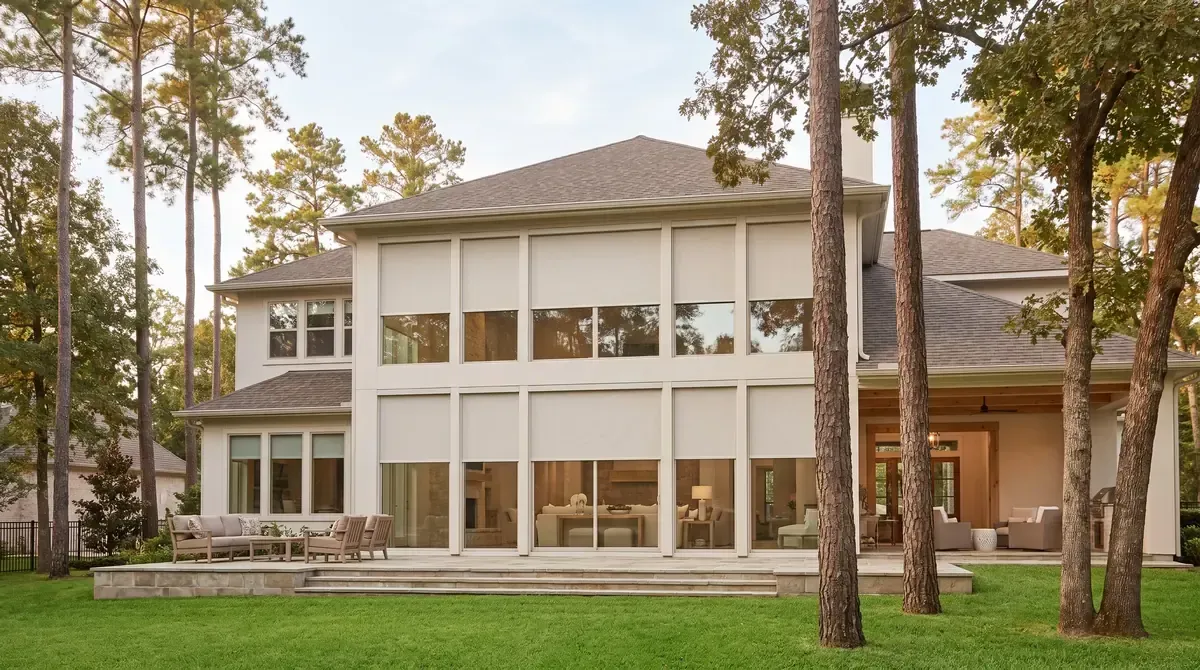
That's the job solar shades for patio spaces are built to do. They hang along the open sides of the porch or veranda and filter the sun before it reaches you, while you still see the yard through the fabric.
At Accent Shutter & Shades, we've worked on Greater Houston homes for more than 35 years, and covered patios are a big part of how Houston families live. Shading one well is worth some thought.
How Solar Shades for Patio Spaces Work
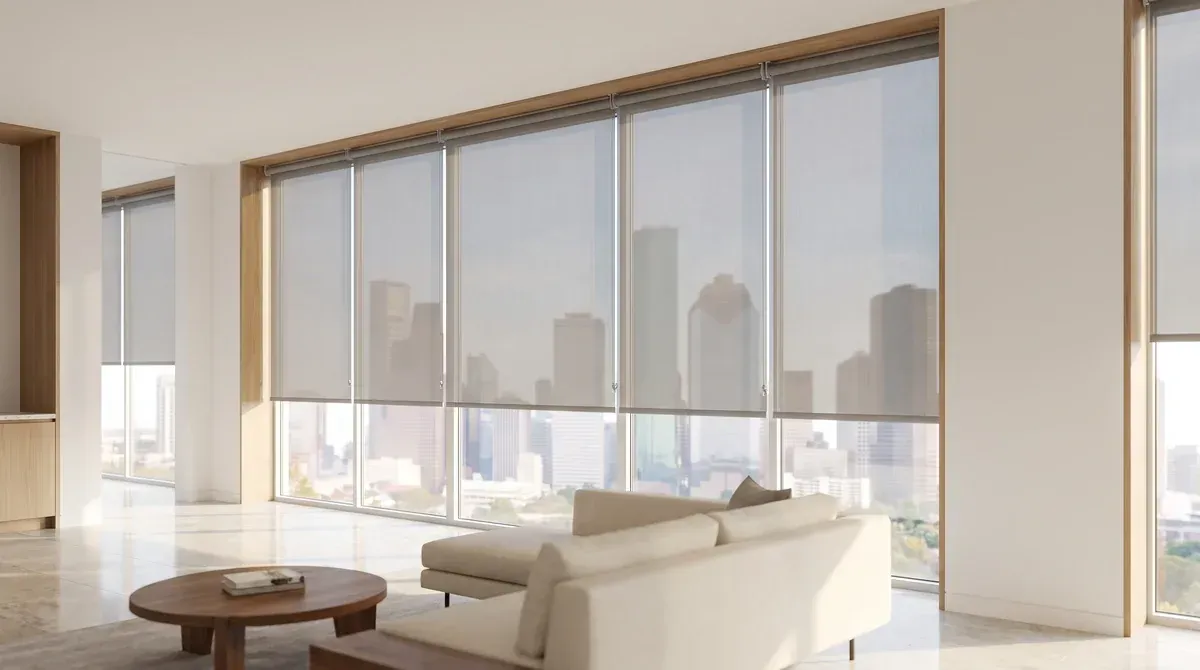
Solar shades are made from a woven screen fabric rather than a solid cloth. Sunlight hits the weave and a good part of it is stopped or scattered, so the space behind the shade stays cooler and the glare drops. Because the fabric is open, the view stays.
Placement does a lot of the work. The Department of Energy notes that shading on the outside of a house is the most effective way to cut solar heat gain, because it stops sunlight before it reaches the glass. A patio shade does that for the patio itself and for any doors and windows that open onto it. Houston's long cooling season and low western sun make that worth having, and it's one reason custom shades in Houston so often end up outdoors.
Every patio is a little different, too: the spacing of the columns, the height of the beam, which sides face the late sun. A shade sized to the actual opening hangs straight and closes cleanly. Homes across the Houston area, from Heights porches to Spring-area verandas, vary a lot in exactly those measurements.
And since a patio shade lives outside, the installation matters as much as the fabric. You can see what homeowners say about our installers in reviews from our customers.
Openness: How Much Sun, How Much View
The weave's openness is the percentage of open space in the fabric. Across the industry, solar shade fabrics usually run from about 1% to 10%, and the number sets the trade-off.
- Around 1%: the most glare and heat control and the most daytime privacy, with the least view.
- Around 3%: a middle ground that suits many west-facing patios.
- Around 5%: more light and a clearer view, with less sun control.
- Around 10%: the most open view, for patios that only catch mild sun.
A patio that faces west usually wants the tighter end of that range. One that only gets a slice of late sun can go more open and keep the yard in clear view.
Fabric Color Changes the View
Color matters more than people expect. Hunter Douglas says darker solar fabrics are better at cutting glare and give clearer view-through, while lighter colors reflect more heat but can make the view look a little hazy.
On a patio that looks out over a pool or a lawn, a darker fabric often wins for that reason. There's also the view from the street to think about. The shade fabric becomes part of the outside of the house, so it should sit comfortably with the trim, the brick or the stucco.
Wind and Weather
Patio shades are not storm protection, and they shouldn't be treated that way. When strong wind or a summer thunderstorm rolls in, the shades go up.
Two things help in everyday breezes. Side tracks or guides hold the edges of the fabric so it doesn't flap or swing. And on motorized systems, a wind sensor can raise the shades automatically when gusts pick up, which matters most when nobody is home to do it by hand.
Manual or Motorized
Manual patio shades work fine on a small porch. On a wide patio with several shades, motorization makes daily use much easier, since one button brings every side down together. Ask how the motor is powered and where the controls will live, especially if the patio is used as an outdoor living room in the evenings.
Planning a Patio Shade Project
Start with the sun, not the catalog. Sit on the patio at four or five in the afternoon and note which openings let the glare in. Those are the ones that need shades first, and they decide how tight a weave the shades need.
Then measure the real openings between columns and posts, look at how each shade will mount to the beam, and decide on manual or motorized before ordering. A shade that fits its opening, closes straight and goes up easily is the one that gets used every afternoon.
Common Questions About Patio Shades
Do solar shades give privacy at night?
Not much. A solar shade blocks the view in from outside during the day, when it's brighter outdoors than on the patio. After dark, with lights on under the patio roof, the effect reverses and people can see in. Tighter weaves help a little, but no solar fabric is a night-time privacy screen.
Does every side of the patio need a shade?
Usually not. Shade the openings that take the afternoon sun and leave the side with the best view open, or give it a more open weave. That keeps the patio cool without closing it in.
How Accent Shutter & Shades Can Help
If you'd like help shading a covered patio, we can bring solar shade fabric samples out to your patio so you can see the openness and color against your own view. To see how solar shades would look on your patio, schedule a free in-home consultation with Accent Shutter & Shades or call (281) 320-0009.