Window Treatments to Keep Heat Out of West-Facing Houston Rooms
October 26, 2026
Why West-Facing Rooms in Houston Overheat in the Afternoon
By four o'clock on a July afternoon, a west-facing room in Houston can feel like part of a different house. The morning was fine. Then the sun swings around, drops low and comes straight through the glass for hours. That's the room where window treatments to keep heat out earn their keep.
The low angle is the problem. Roof overhangs and porch roofs shade a south window at midday, but late western sun slides right under them. And glass lets a lot of it in: the U.S. Department of Energy estimates that about 76% of the sunlight hitting standard double-pane windows enters the home as heat during the cooling season.
At Accent Shutter & Shades, we've fitted window treatments to Greater Houston homes for more than 35 years, and the west side of the house is where the choice makes the biggest difference.
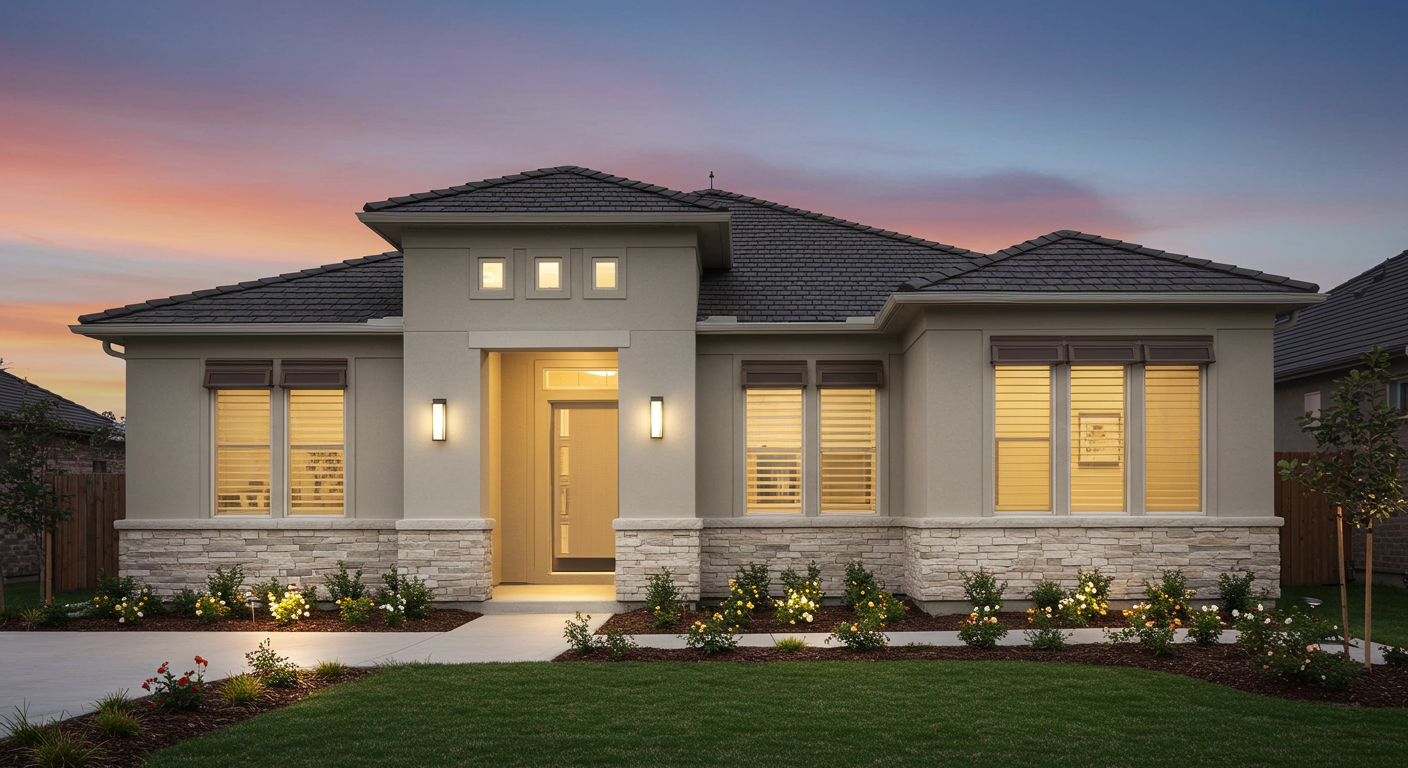
The house itself matters too. A Heights bungalow, an Inner Loop townhome and a two-story in West Houston each take the afternoon sun differently, which is why window treatments in Houston tend to work best when they're chosen room by room.
Four Window Treatments to Keep Heat Out, Compared
Plantation shutters, cellular shades, solar shades and window film all cut heat on a west window. They just do it in different ways, and each one gives up something different in return.
What They Have in Common
- All four work from the room side of the glass, so they reduce heat that has already come through the window rather than stopping it outside.
- All four cut glare as well as heat, which counts for a lot in a room with a TV or a desk.
- All four only help when they're in position. A Department of Energy study found that about 75% of residential window coverings stay in the same position every day, and a shade left up at 4 p.m. does nothing for the room.
Where They Differ
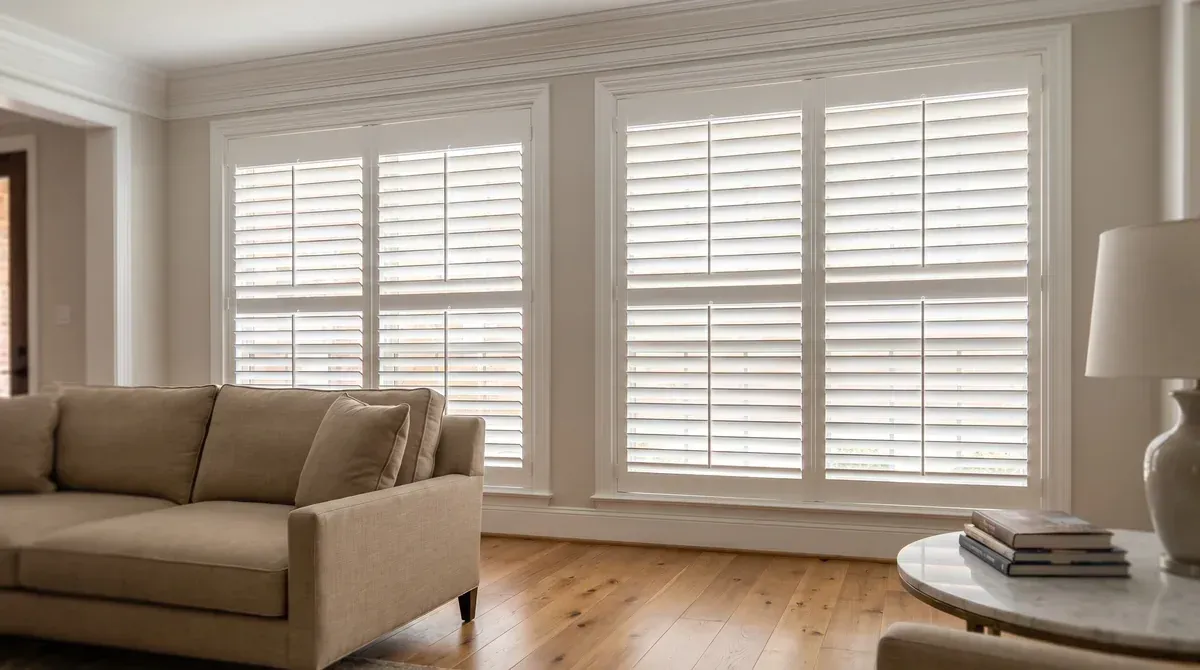
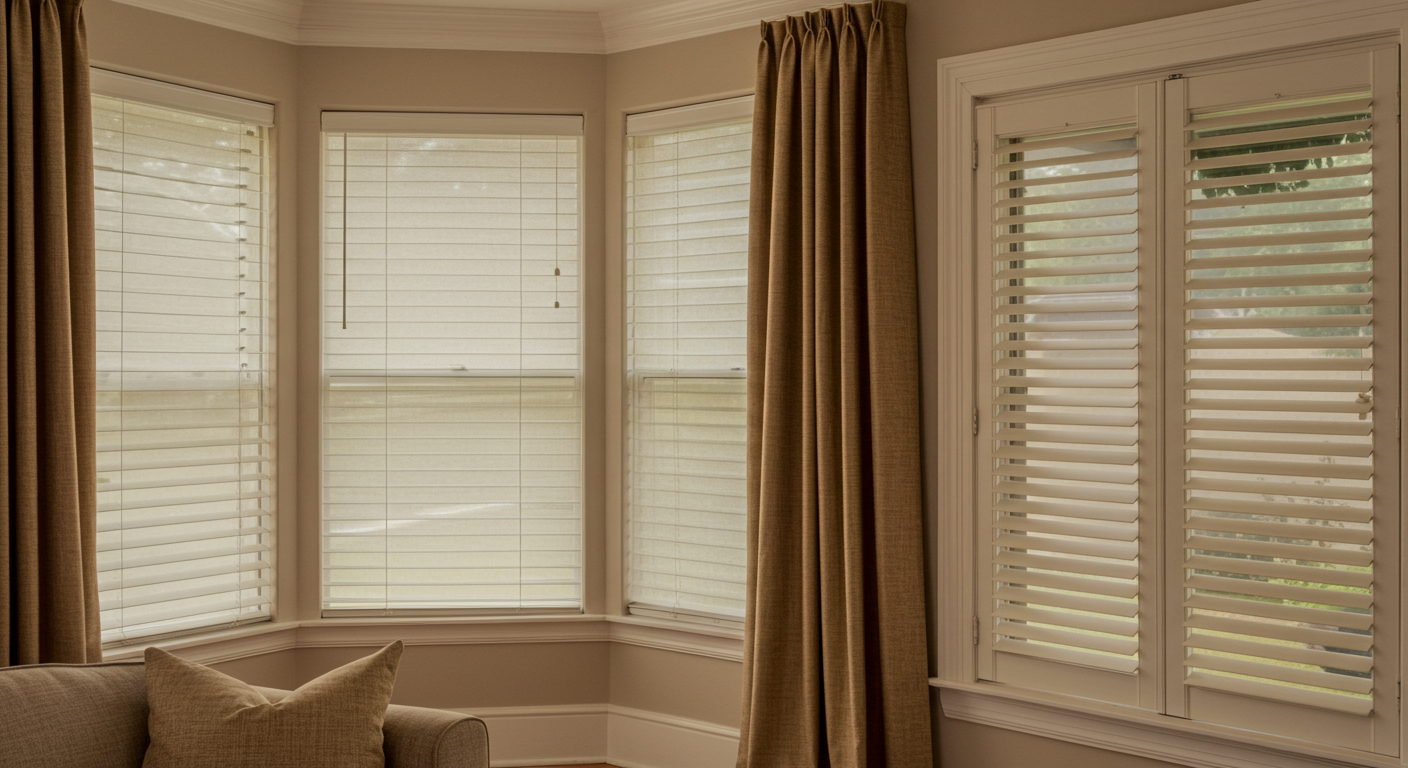
- Plantation shutters. Closed, the panels block the sun outright. Tilted, the louvers bounce direct light up toward the ceiling and keep the room bright. They give up the most view when closed, and they're the one option here that we build ourselves, in our Spring factory.
- Cellular shades. The honeycomb cells trap air, which adds a layer of insulation at the window. In lab-home testing for the Department of Energy, cellular shades lowered cooling energy compared with ordinary vinyl blinds, and they did best when lowered during the hottest part of the day. The trade-off is the view: when they're down, it's gone.
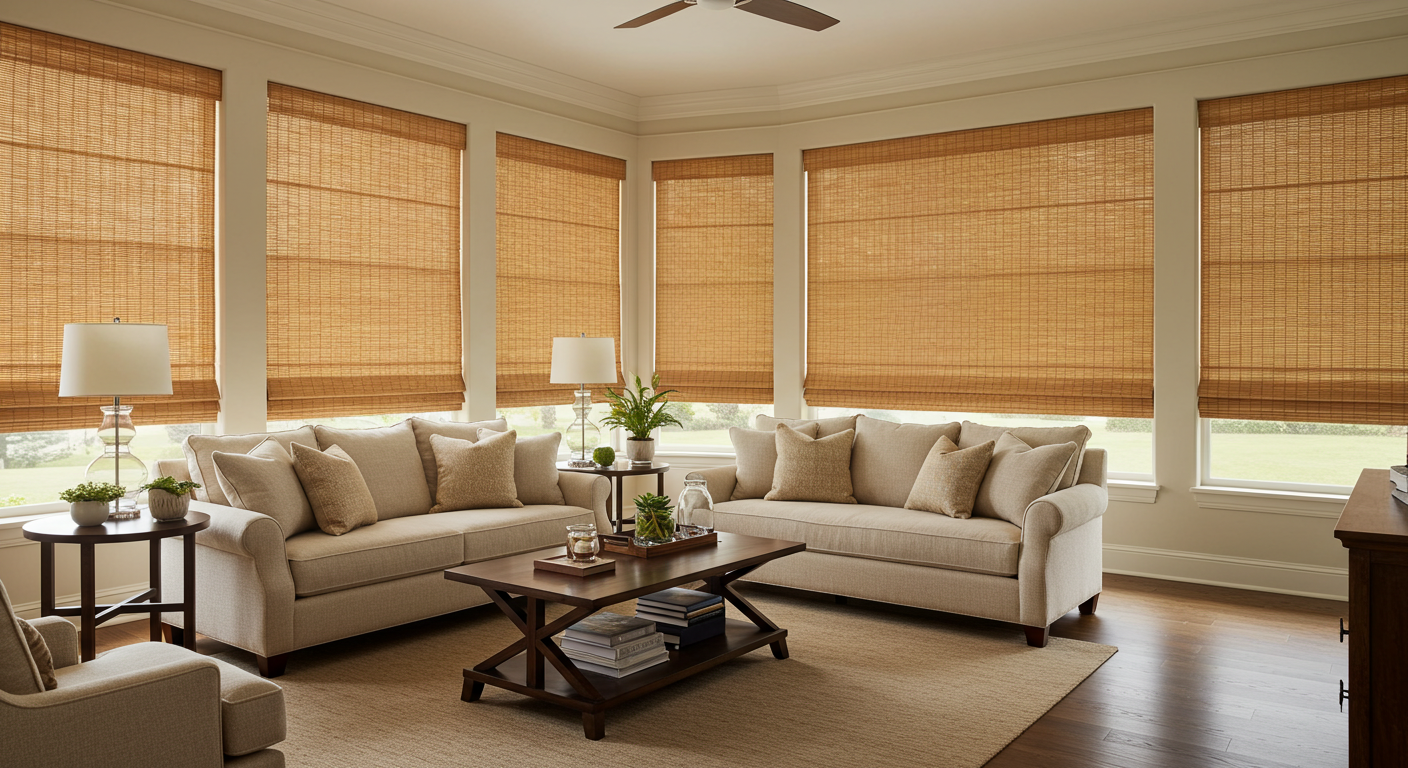
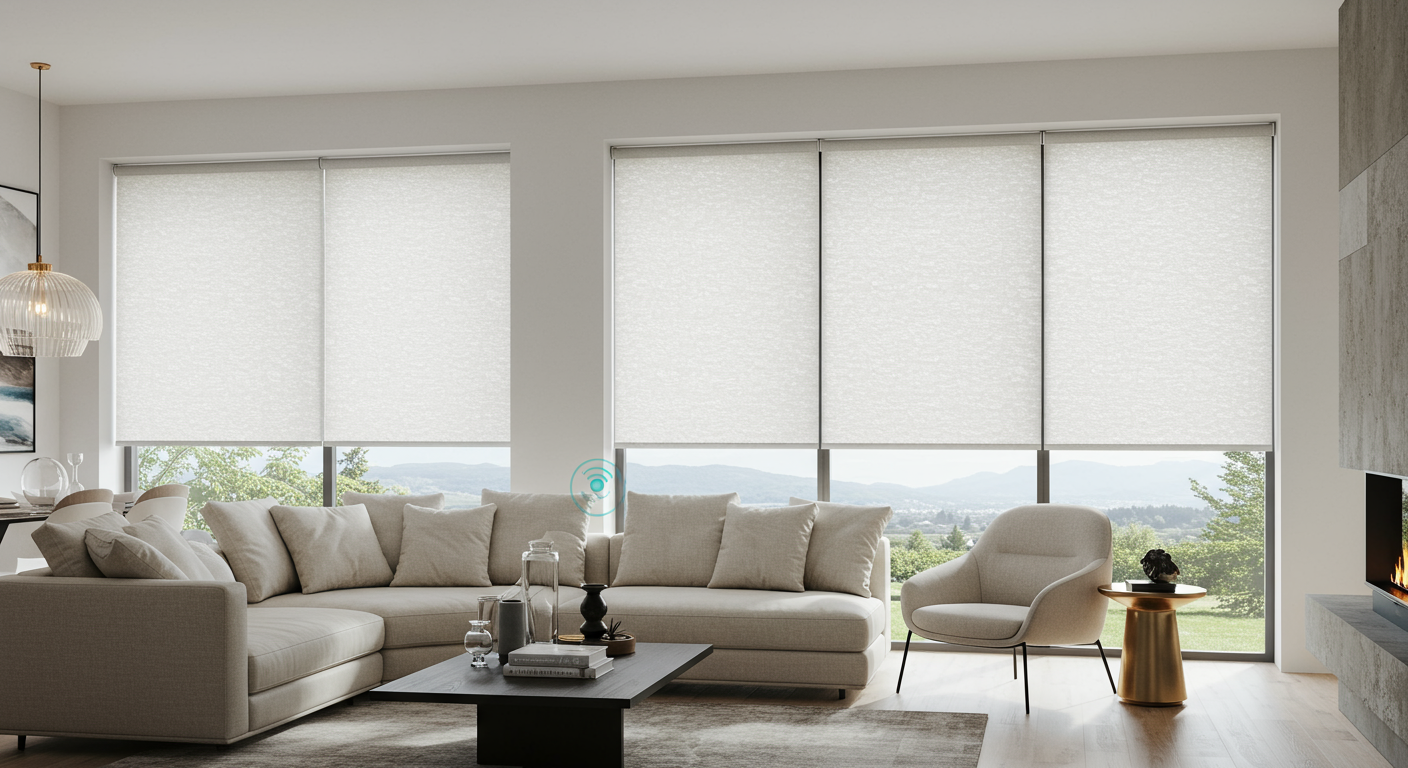
- Solar shades. A woven screen fabric that cuts heat and glare while you still see out. The weave's openness, usually 1% to 10%, sets the balance. A tighter weave blocks more heat and glare, and a more open one keeps more of the view.
- Window film. A nearly invisible layer on the glass itself, so the view and the look of the window stay the same. It cuts heat and glare with nothing to open or close. Film has to suit the glass it goes on, which is one reason it belongs with a professional installer.
Our Hunter Douglas shades, cellular and solar shades among them, come in manual, battery or direct-wire motorized versions.
For the glass itself, we offer Hüper Optik window film, a nano-ceramic film that Hüper Optik rates to reject 99.9% of UV rays without obscuring the view.
Matching the Fix to the Room
West rooms aren't all used the same way, so the right answer changes from one room to the next.
- Family or media room. Glare on a screen matters as much as heat here. Closed shutters or a 1% solar shade handle both.
- Living room with a view. A 3% or 5% solar shade, or window film, keeps the backyard (or the lake) in sight.
- Bedroom. Cellular shades insulate, and in a room-darkening fabric they help a west bedroom shed the day's heat before bedtime.
- Kitchen or breakfast room. Polyvinyl shutters stand up to steam and humidity and still close tight against the late sun.
Layering works too. Film on the glass with shutters or shades inside is a common pairing on a hard west exposure. The film works all day, and the shutters or shades close when the sun is lowest.
Keeping a West Room Comfortable Through a Houston Summer
The fix that lasts is the one that actually gets used. That's the case for motorization on west windows. Hunter Douglas PowerView Automation can lower shades on a schedule tied to the sun's position, so the room is covered by mid-afternoon whether anyone is home or not.
When you're weighing options, look at the room late in the day, when the problem actually happens. The glare angle, the hot spots on the floor and the furniture that's starting to fade all show up then. A treatment chosen in the morning light can miss all three.
Common Questions About West-Facing Windows
Do exterior shades keep out more heat than interior ones?
Yes. The Department of Energy says exterior shades are the most effective at reducing solar heat gain, because they stop sunlight before it reaches the glass. On a covered patio or veranda on the west side of the house, exterior solar shades do that job and still leave the view open.
Will window film make the room darker?
Not much, if the tint is chosen for the room. Hüper Optik film comes in three tint levels, and even the lighter ones cut heat and glare without obscuring the view or discoloring the glass. So the room keeps its daylight.
Should every window on the west side get the same treatment?
Not necessarily. A bedroom and a family room on the same wall have different jobs. Keeping colors in one family (white shutters with white or neutral shades, for example) lets mixed treatments still read as one house from the street.
How Accent Shutter & Shades Can Help
If you'd like a second opinion on a hot west room, we bring shutter, shade and film samples to your home so you can judge them in your own light. To see how heat-blocking window treatments would look in your home, schedule a free in-home consultation with Accent Shutter & Shades or call (281) 320-0009.